The Highest Protection Class: DC/DC Converters According to IP69K
TL;DR: How does a DC/DC converter permanently survive high-pressure cleaners, aggressive fertilizers, and extreme temperatures? The answer lies in the uncompromising combination of a heat-dissipating solid aluminum housing, PU potting rigorously tested in our own lab, and tinned cables firmly integrated into the PCB. This design guarantees the IP69K protection class and prevents thermal failures (derating) – all in a form factor that is often only a quarter the size of conventional solutions.
The Octopus of the Industry: Small, Adaptable, and Extremely Resilient
Imagine an octopus in the deep sea. Unfazed by massive water pressure, it nestles into the smallest crevices, adapts its shape to the environment, and effortlessly repels dirt. This exact octopus-like strength is what electronic components in the industry need: They must be extremely robust and, thanks to a tiny form factor, capable of being integrated anywhere.
DC/DC converters take on the critical task of converting voltages in machines and vehicles. When these converters are deployed under harsh conditions – whether in forklifts that are regularly hosed down with high-pressure cleaners, or more recently in agriculture, where aggressive fertilizers take a massive toll on the electronics – maximum resilience is required. A standard device is simply no longer sufficient here.
What Exactly Is IP69K? Ultimate Protection Against Water, Dust, and Pressure
IP69K is one of the highest standards for protecting electronics from harsh environments. But what does that actually mean? IP stands for "Ingress Protection" (keeping dirt and water out).
- The first digit (6): 100% dust-tight. Not a single grain of dirt gets inside the housing.
- The second digit (9K): Fully protected against high-pressure and steam cleaning.
Simply put: An IP69K-certified device can easily handle a close-range water jet blasting at 100 bar pressure and 80 °C from any direction. It guarantees total all-round protection against dirt, dust, water, mud, and even hot steam.
The invisible danger of IP69K: Heat death in a sealed system
If you need an IP69K rating, you are building completely sealed systems. The problem? If water can't get in, hot air can't get out either. That’s why thermal design quickly becomes a matter of survival for electronics in IP69K applications.
A striking example from our own experience happened on the water. Naturally, electric boats are often out in the middle of summer. We saw a competitor’s fully enclosed device fail at outside temperatures of just 30 to 40 degrees Celsius due to thermal overload. With no air circulation inside the housing, a total system failure was inevitable.
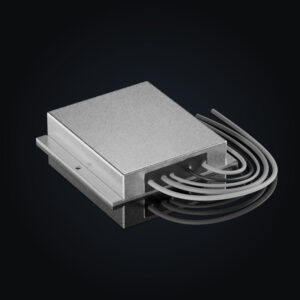
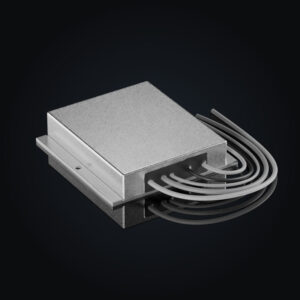
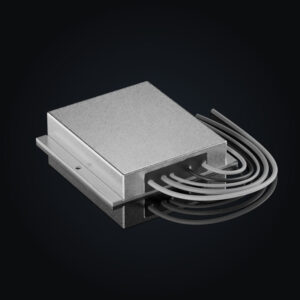
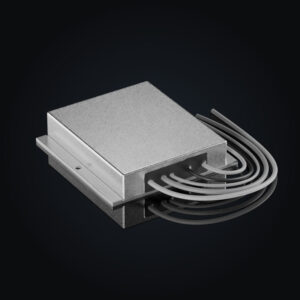
This is exactly where our IP69K design really shines. Our voltage converters are sometimes only a quarter of the size and weight, yet they handle these thermal loads effortlessly. Our PU potting concept, combined with the solid aluminum housing, dissipates heat to the outside extremely efficiently – even though the device is completely hermetically sealed. Because of this, our devices don't experience thermal derating (a drop in performance due to heat).
Eliminating cables as a weak point
Connections are often the biggest entry point for moisture. We don't make any compromises here:
- Direct PCB integration: We attach the cables directly to the PCB, so they basically become a physical part of the board.
- Mechanical support: We recently introduced a new bridge or potting extension. This innovation mechanically supports the cables where they exit the housing and protects the bending radius.
- (Tinned) cables: Where there's water, rust usually isn't far away. That's why we sometimes use tinned cables to prevent corrosion right from the start.
Since fully potted devices are very hard to repair later on, we leave nothing to chance during production. Every converter goes through fully automated electrical tests – both before and after the potting process. This ensures that absolutely no defective products leave our facility. We also have the actual robustness officially certified by external testing centers.
A look into the future: Efficiency is key
The industry is changing rapidly. We are seeing a massive trend toward more battery-powered devices – from heavy construction machinery and autonomous guided vehicles to mobile robotics. For voltage converters, this means efficiency is becoming the absolute deciding factor. Every extra percent of efficiency directly extends the battery life of the machines. With our compact and robust designs, we are perfectly prepared for exactly this.
Looking for a custom solution?
We understand that every project has its own unique, and often extreme, requirements. Feel free to reach out to us to find a solution tailored specifically to your needs. Our team of experts is always here to help.