


DC/DC converters for rail transport systems
DC/DC converters for rail vehicles reliably supply control systems, communication systems, measuring equipment and other onboard electronics with stable output voltages. Our robust power supply solutions handle widely fluctuating 24 VDC, 48 VDC and 110 VDC onboard power systems and are designed to withstand vibration, shock, contamination and large temperature variations in railway applications.
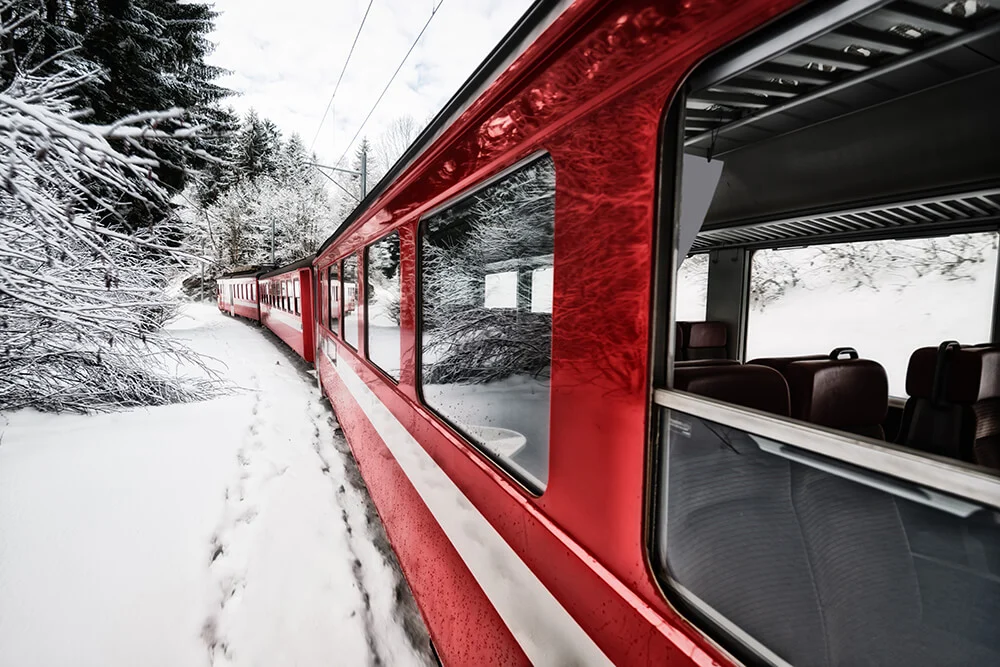
Stable power supply with fluctuating railway onboard power systems
A manufacturer of 130 kVA auxiliary converters for electric locomotives requires a galvanically isolated DC/DC converter for a 110 V railway application. The connected electronics require both positive and negative auxiliary supply voltages.
For this application, the 364W2-15015-SDB1 push-pull converter is used. It handles an ultra-wide input voltage range from 16 VDC to 160 VDC and provides a galvanically isolated bipolar output voltage of ±15 VDC.
Thanks to its wide input voltage range, the converter can be used not only in 110 VDC onboard power systems, but also in applications with 24 VDC or 48 VDC.
Flexible bipolar output voltage
Bipolar DC/DC converters provide a positive and a negative output voltage with a common reference potential. Such supply voltages are required, for example, for analogue circuits, measurement systems, signal processing and other active electronic assemblies.
The 364W2-15015-SDB1 allows fully asymmetrical loading of its outputs. The available output power can therefore also be used on just one output, for example at +8 A at +15 VDC or −8 A at −15 VDC.
This makes the converter suitable for applications where the load is not evenly distributed between the positive and negative outputs.
Robust and scalable design
The DC/DC converter is housed in a robust all-aluminium enclosure. The electronics are fully encapsulated in polyurethane, protecting them against vibration, shock and other environmental conditions.
If higher output power is required, multiple units can be connected in parallel. This allows the available power to be scaled without having to develop an entirely new converter platform.
Result
A single converter platform covers 24 VDC, 48 VDC and 110 VDC power systems while providing the required galvanically isolated bipolar auxiliary voltage. This reduces the number of different device variants and simplifies use across different versions of the auxiliary converter.
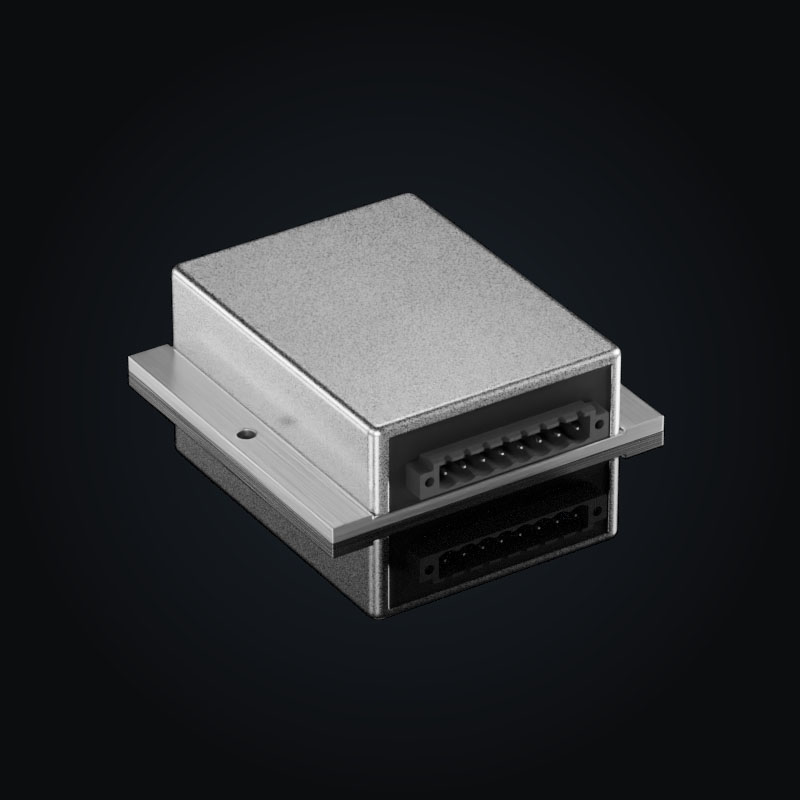
Bipolar power supply for a 130 kVA auxiliary converter
A manufacturer of 130 kVA auxiliary converters for electric locomotives requires a galvanically isolated DC/DC converter for a 110 V railway application. The connected electronics require both positive and negative auxiliary supply voltages.
For this application, the 364W2-15015-SDB1 push-pull converter is used. It handles an ultra-wide input voltage range from 16 VDC to 160 VDC and provides a galvanically isolated bipolar output voltage of ±15 VDC.
Thanks to its wide input voltage range, the converter can be used not only in 110 VDC onboard power systems, but also in applications with 24 VDC or 48 VDC.
Flexible bipolar output voltage
Bipolar DC/DC converters provide a positive and a negative output voltage with a common reference potential. Such supply voltages are required, for example, for analogue circuits, measurement systems, signal processing and other active electronic assemblies.
The 364W2-15015-SDB1 allows fully asymmetrical loading of its outputs. The available output power can therefore also be used on just one output, for example at +8 A at +15 VDC or −8 A at −15 VDC.
This makes the converter suitable for applications where the load is not evenly distributed between the positive and negative outputs.
Robust and scalable design
The DC/DC converter is housed in a robust all-aluminium enclosure. The electronics are fully encapsulated in polyurethane, protecting them against vibration, shock and other environmental conditions.
If higher output power is required, multiple units can be connected in parallel. This allows the available power to be scaled without having to develop an entirely new converter platform.
Result
A single converter platform covers 24 VDC, 48 VDC and 110 VDC power systems while providing the required galvanically isolated bipolar auxiliary voltage. This reduces the number of different device variants and simplifies use across different versions of the auxiliary converter.
DC/DC converters for the retrofit of steam and diesel locomotives
In a retrofit project, older steam and diesel locomotives are being equipped with modern digital radio technology. The radio equipment requires a stable low-voltage power supply, while the available voltage sources vary significantly depending on the type of locomotive.
Depending on the vehicle, diesel locomotives provide a 24 VDC or 110 VDC onboard power system. In steam locomotives, by contrast, power is supplied by alternators. During normal operation, their voltage ranges from approximately 20 VDC to 35 VDC and can rise to as much as 80 VDC in the event of a fault.
A single power supply solution was required for all vehicle types.
Customised output voltage for digital radio equipment
For this project, the 364W2-15015-SDB1 DC/DC converter was adapted to the specific application and configured with an output voltage of 13.8 VDC.
This allows the intended 12 V radio equipment to be reliably supplied with power. The input voltage range from 16 VDC to 160 VDC covers both the onboard power systems of the diesel locomotives and the widely fluctuating alternator voltages of the steam locomotives.
Result
The same DC/DC converter can be used in different steam and diesel locomotives. This reduces the number of device variants and the development effort, while simplifying technical approvals and spare parts inventory and ensuring a reliable, stable power supply for the retrofitted radio equipment.
DC/DC converters for your rail vehicle
Railway projects differ in terms of onboard power systems, voltage fluctuations, output voltage, power, galvanic isolation and environmental conditions. We review your application and determine whether a standard product is suitable, an existing platform can be adapted or a custom development is required.
FAQs
Have questions? We have answers!
What onboard power system voltages are used in rail vehicles?
Depending on the vehicle and application, rail vehicles use different onboard power system voltages, such as 24 VDC, 48 VDC or 110 VDC. In addition, the voltage can fluctuate significantly during operation. DC/DC converters with a wide input voltage range can cover different onboard power systems with a single converter platform.
Why are wide-input-range DC/DC converters used in railway applications?
A wide input range allows strongly fluctuating input voltages to be handled safely while providing a stable output voltage. Depending on the design, the same DC/DC converter can also be used for different onboard power system voltages and vehicle platforms.
When is galvanic isolation required in rail vehicles?
Galvanic isolation electrically separates the input and output of the DC/DC converter. It is used when different circuits need to be safely isolated from each other or when the application requires a galvanically isolated power supply.
What is a bipolar output voltage and what is it used for?
Bipolar DC/DC converters provide a positive and a negative output voltage with a common reference potential, for example ±15 VDC. Such supply voltages are required for applications including analogue circuits, measurement systems and signal processing.
Can a DC/DC converter be adapted for different rail vehicles?
Yes. Depending on the application, existing converter platforms can be adapted, for example in terms of output voltage and electrical design. In one of our retrofit projects, an existing DC/DC converter was adapted to 13.8 VDC and can therefore be used in different steam and diesel locomotives.
How are DC/DC converters protected against vibration and shock in railway applications?
Our DC/DC converters are designed for demanding operating conditions. Robust all-aluminium housings and full polyurethane encapsulation protect the electronics against vibration, shock and other environmental conditions.
Can multiple DC/DC converters be connected in parallel for higher power levels?
With DC/DC converters designed for this purpose, the output power can be scaled by connecting multiple units in parallel. This allows an existing converter platform to be used for higher power requirements without having to develop an entirely new converter.
More questions? Check our FAQ or glossary for further information, or contact us.