


DC/DC converters for renewable energy: wind power, photovoltaics and off-grid systems
In wind turbines and solar installations, DC/DC converters supply the systems that make operation possible in the first place: pitch systems, sensors and actuators, communication modules and control systems, typically with a stable 24 VDC supply. The requirements are demanding: fluctuating input voltages, temperatures from −40 °C to +85 °C, vibration, and maintenance access that may require climbing up to the nacelle of a wind turbine or travelling to an installation in the field.
Our converters with wide input voltage ranges operate in this environment without power derating, achieve efficiencies of up to 95%, and have been running reliably for years without failures at our service partners.
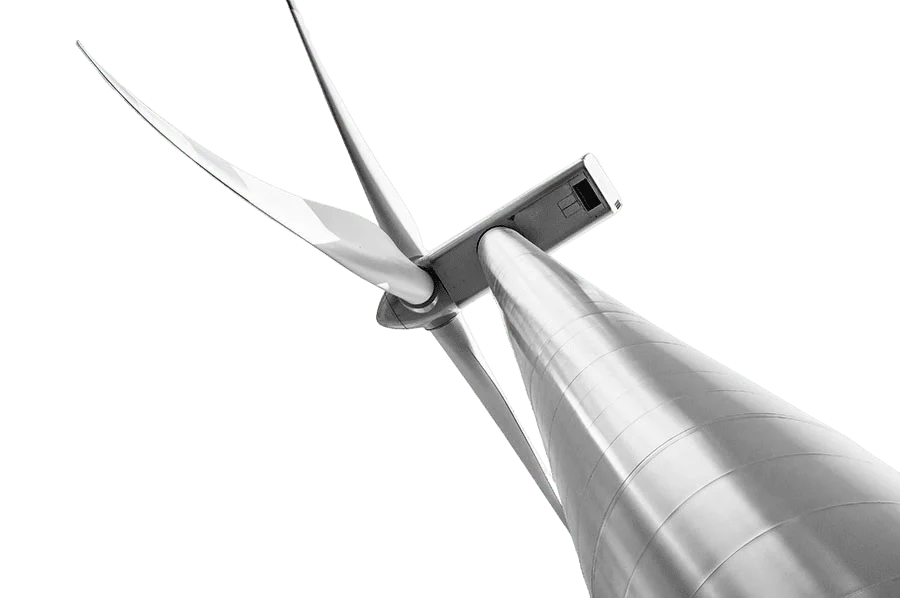
Inaccessible, safety-critical, designed to last for decades
DC/DC converters keep the systems running in wind and solar power installations that safety and energy yield depend on. They ensure a stable power supply even when wind speed, solar intensity or the state of charge of the energy storage systems changes.
The key difference compared with many other applications is maintenance access. A converter in the nacelle – the machinery housing at the top of the tower – cannot be replaced in five minutes: it requires a technician, a climb or crane access, a suitable weather window with appropriate wind conditions – and the turbine remains out of operation during this time. A component failure therefore costs many times more than the component itself. This changes the equation: it is not the purchase price that matters, but the number of service interventions over the system’s lifetime.
Then there is the time horizon. Systems operate for 20 years or more, often beyond the availability of their original components. Suppliers in this field must not only build reliable devices, but also ensure that they remain available and can be further developed for years to come.
Reliable power supply for pitch systems and communication modules in wind turbines
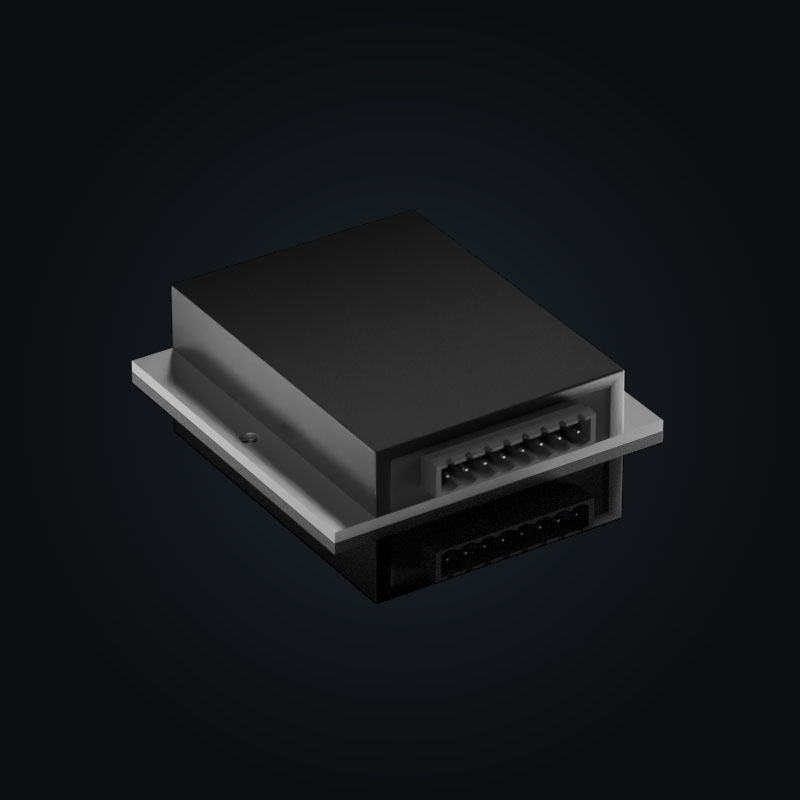
Wind turbines are often located in remote areas and exposed to extreme weather conditions. Safety systems must remain operational at all times, and communication with the turbine must always be available. Two different wide-input voltage converters are used for this purpose: the 154DH-24-ON switching regulator supplies sensors and actuators and is also used for the pitch system. This system adjusts the angle of the rotor blades to match the turbine output to the wind speed. The galvanically isolated 344DH-24 DC/DC converter with reinforced isolation supplies the communication module and is powered by a backup battery in the event of a failure.
Over the years, these converters have been continuously adapted to meet the requirements of the application. The latest version uses a full aluminium housing.


Redesigned together instead of repeatedly repaired: wind turbine service partner
Many wind turbines contain components that were undersized from the outset. As long as the turbine manufacturer remains in business, this can be addressed through warranty claims and corrective measures. If the manufacturer is no longer in business, the problem is left to the service partner – and to a turbine that is expected to continue generating revenue for years to come.
This was exactly the situation faced by a service company maintaining wind turbines from an insolvent manufacturer: the factory-installed DC/DC converters were failing repeatedly. Installing an identical original part would simply have made the next failure inevitable – with each failure requiring a technician to access the nacelle and resulting in turbine downtime. The economics did not add up: the recurring service interventions cost many times more than the savings made on the components.
Instead of continuing to replace the same component, we redesigned the assembly together with the service partner. The 154DH-24-ON is now used: ultra-wide input voltage range from 28 to 160 VDC with a permissible peak voltage of 170 VDC, 24.0 VDC output at up to 13.0 A and 300 W, with an efficiency of up to 95%.
Three characteristics were decisive. The 1:5.7 input range fully covers the system’s voltage conditions, including peaks of up to 170 VDC – transients that can cause marginally rated converters to fail. The 300 W output power provides sufficient headroom above the actual load instead of operating the device continuously at its limit. And an efficiency of up to 95% means less heat dissipation in the enclosed installation space – the most important factor for extending the service life of the electronics when active cooling is not possible.
The solution was not simply an off-the-shelf purchase: the installation situation, existing wiring, load profile, temperature conditions and connection technology all had to be clarified – through numerous discussions in both directions, directly between the technicians on site and our development engineers. This is exactly the advantage of having development and technical contacts under one roof: short communication paths, fast answers and no handoffs through multiple distribution levels.
The solution has been running for several years without a single failure
The project demonstrates two things: In difficult-to-access installations, the component price is the smaller cost factor, while the number of service interventions is the larger one. And: we do not simply supply a device from a catalogue, but work with our customers on redesigning an existing assembly – even when support from the original system manufacturer is no longer available.
Galvanically isolated 24 V power supply for off-grid solar systems
A manufacturer of off-grid solar systems requires a 24 VDC power supply in the kilowatt range for its systems – with one clear requirement: at least 95% efficiency across the entire operating range. In an off-grid system, every watt lost is stored energy that first had to be generated at considerable effort.
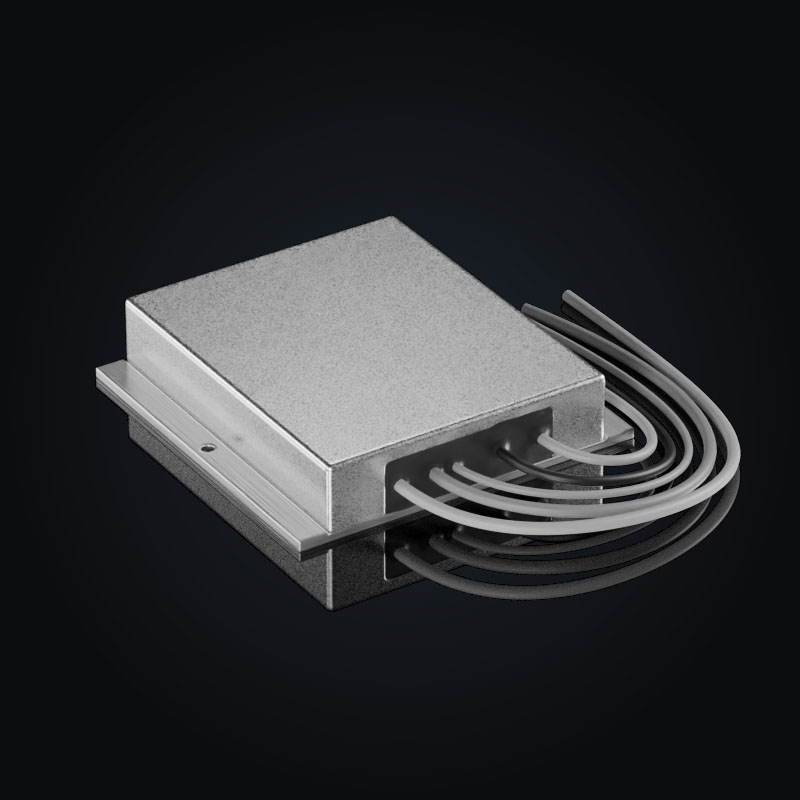
The galvanically isolated 755-24-SD is used for this application. It is designed for ambient temperatures from −40 °C to +85 °C without derating. In solar applications, this is more than just a datasheet specification: internal temperatures of 60 to 70 °C are common in control cabinets exposed to direct sunlight. Converters that reduce their output under these conditions have to be oversized from the outset – requiring additional installation space and increasing costs. The 755-24-SD delivers its full power even when temperatures rise.
The high efficiency provides two benefits: it saves energy while also generating less waste heat inside the enclosed housing – reducing heat build-up in the system.
Two units are connected in parallel to achieve the required power. This scales the existing platform without the need to develop a new converter.
DC/DC converters tailored to your energy system
Whether you are designing a new system or replacing an existing device that keeps failing – send us your input voltage, output voltage, power requirements and installation conditions. We will assess your application and show you whether a standard product is suitable, an existing platform can be adapted or a custom development is the right solution.
FAQs
Have questions? We have answers!
What voltage does a pitch system in a wind turbine require?
A stable 24 VDC supply is commonly used for sensors, actuators and control systems. Since the available input voltage in the system fluctuates, a converter with a wide input voltage range is used – such as the 154DH-24-ON.
Why does the communication module require galvanic isolation?
Galvanic isolation electrically decouples the communication system from the rest of the installation and prevents equalizing currents from flowing through the signal lines. In combination with a backup battery, the system remains accessible even if the main power supply fails.
Why does a high-quality converter pay off in wind power applications?
Because the component price is the smaller cost factor. A failure in the nacelle means a technician call-out, climbing or crane access, a suitable weather window and turbine downtime. Converters with a high MTBF and full potting reduce precisely these service interventions.
What does “no derating” mean in solar applications?
It means that the converter delivers its full power across the entire specified temperature range. In a control cabinet exposed to direct sunlight, with temperatures of 60–70 °C, many devices reduce their output and therefore have to be oversized accordingly. The 755-24-SD delivers its full power up to +85 °C without derating.
Why is efficiency so important in off-grid systems?
Because high efficiency provides two benefits. At an output power of 1,000 W, an efficiency of 80% results in around 250 W of power loss, while at 95% it is only about 50 W. This not only saves stored energy but also reduces heat generation inside the enclosed housing. Lower component temperatures also contribute to a longer service life for the electronics.
How can higher power levels be achieved than a single device can provide?
By connecting converters designed for parallel operation. Multiple modules share the load. This scales the power without requiring a new development and distributes the power loss across multiple housings.
More questions? Check our FAQ or glossary for further information, or contact us.