


DC/DC converters for aerial cableways: combined with autonomous transport
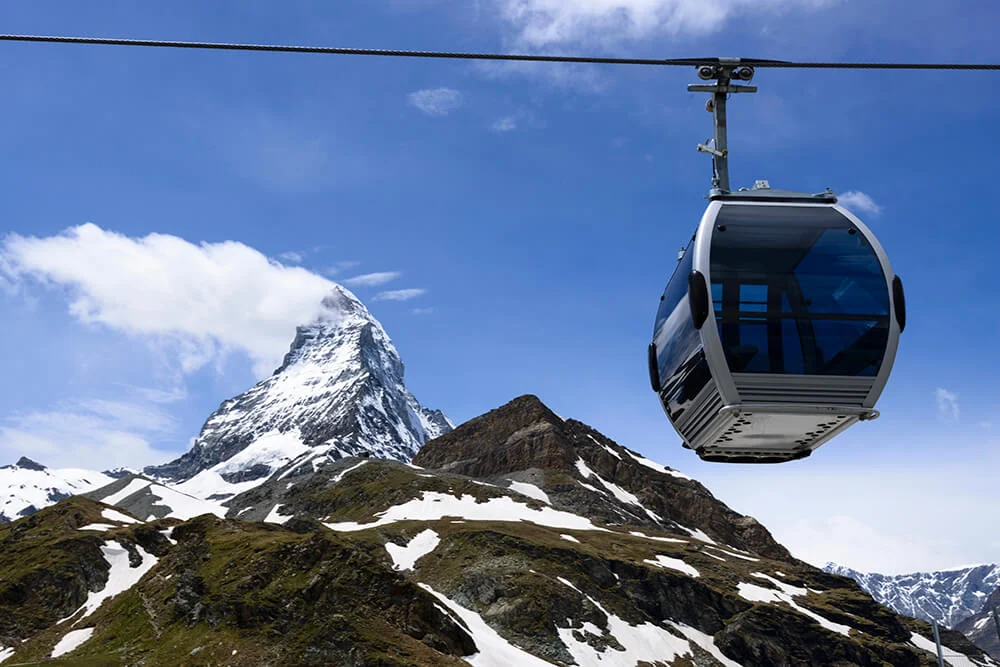
Cable cars operate independently from the power grid: their electrical systems are powered by batteries or supercapacitors, with no continuous connection to the grid. The DC/DC converter therefore has to perform two tasks at the same time – supply the onboard loads with a stable voltage and charge the backup battery in a controlled way – across an input voltage range that changes by a factor of five during operation. A supercapacitor can provide less than 16 VDC when discharged and up to 100 VDC when fully charged. Our converters with ultra-wide input ranges are designed for exactly this: they keep the onboard voltage stable across the full range, from −40 °C to +85 °C without power derating and without moving parts. They are used at glacier installations above 3000 metres as well as in urban systems with connected autonomous passenger transport.
More loads, fluctuating storage voltage, extreme climate
With the electrification of cableway technology, the onboard power supply has evolved from a secondary consideration into safety-relevant infrastructure. Communication, emergency lighting, door controls and passenger information systems all depend on it – and so does operation in the event of a fault. If a cabin stops, the state of charge of the backup battery determines how long communication and lighting remain available.
The technical challenge lies in the energy source. Batteries and supercapacitors do not provide a constant voltage: it decreases during discharge and rises again during charging. With supercapacitors, this range is extreme – from 20 VDC to 100 VDC, a ratio of 1:5. This requires a wide input range: the ability of a converter to provide the same stable output voltage across a wide input voltage range, without switching between ranges and without a drop in power at the limits. Many standard converters on the market cover input voltage ranges from 1:2 to 1:4. If the full range cannot be used, the energy storage system has to be treated as “empty” too early, leaving usable capacity – and therefore operating time – unused.
In addition, there are the environmental conditions: Alpine systems operate in freezing temperatures and at high altitudes, while urban cableways operate continuously in warm and humid conditions. Vibration, condensation and temperature changes are common, while maintenance access and installation space are limited. This requires a converter that operates maintenance-free for years – without fans or moving parts.
Ultra-Wide Input Range from 16 to 100 VDC – 3S Cable Car at the Glacier
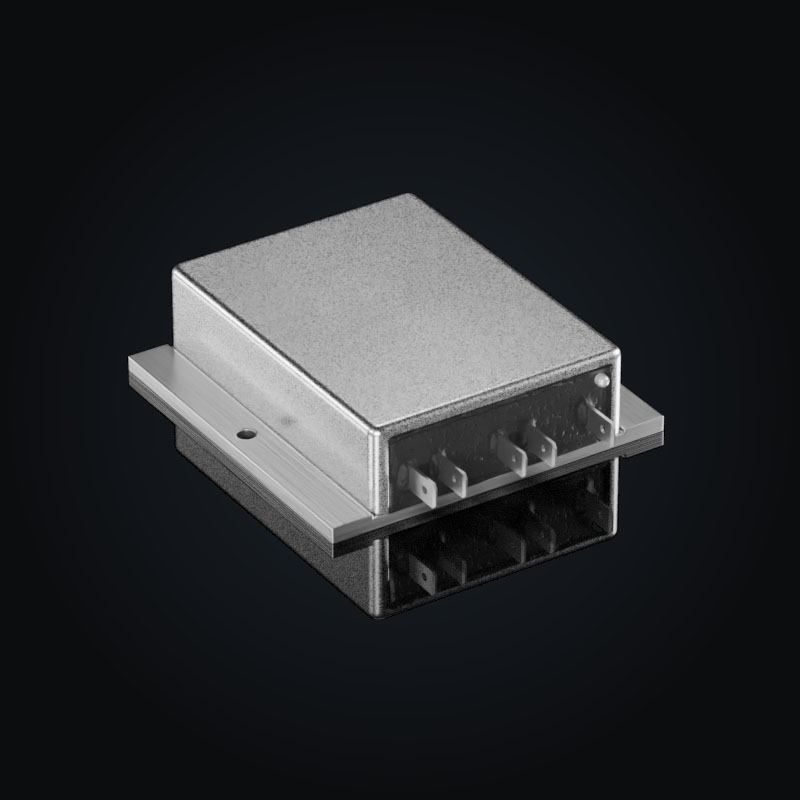
In a 3S cableway on a glacier in the Austrian Alps, our 145E-13.8-SD DC/DC converter provides the complete onboard power supply: it supplies the secondary loads with a stable 13.8 VDC and simultaneously charges the backup battery safely.
It is powered by supercapacitors whose voltage varies from below 20 VDC when discharged to 100 VDC when fully charged. This is where the ultra-wide input range provides a clear advantage: the converter operates across the entire 1:5 range – at 100 VDC as well as at 20 VDC, without switching between ranges, without interruptions and without a drop in power at the lower end. This allows the stored energy to be fully utilised. The output voltage remains constant at 13.8 VDC, regardless of the state of charge of the energy storage system.
The second requirement is simultaneous battery charging. A converter without a defined charging profile either does not charge the battery properly or becomes overloaded when charging starts. The 145E-13.8-SD supplies the loads and provides controlled charging – all from a single device, without an additional charger in the already limited installation space of the cabin. And it does so at altitudes of over 3,000 metres and at temperatures where standard power supplies shut down.
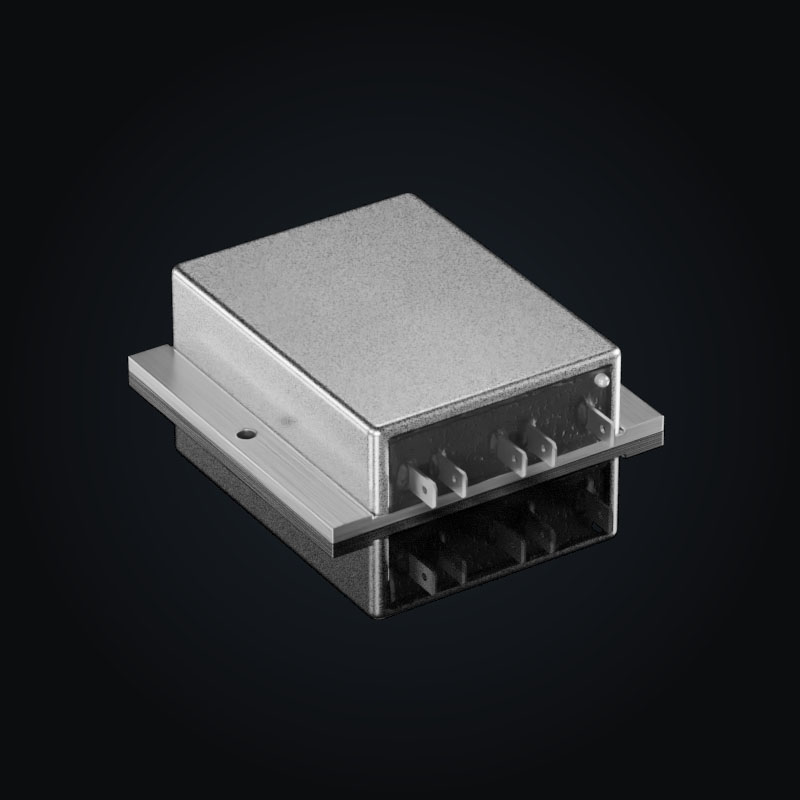
In another project, on the cableway at Switzerland’s highest Alpine border crossing, our 154DH-27-ON regulates the onboard voltage from 48 VDC down to a stable 27 VDC.
Innovative solutions for aerial cableways and autonomous passenger transport
The combination of a cableway and a seamless transition to autonomous passenger transport is a particularly environmentally friendly solution for urban mobility: where the cableway cannot provide direct access, an autonomous vehicle takes over – without passengers having to change vehicles. Electrically, this means several power levels within a single system that must remain properly isolated from each other.
In the cableway, a supercapacitor operates with a final charging voltage of 51 VDC. It is charged by the galvanically isolated 729-48-SD: from an input voltage of 12 to 32 VDC, it provides 48 VDC at up to 9.5 A and 450 W, with an efficiency of up to 95%.
Its CC/CV characteristic is crucial. When switched on, a discharged supercapacitor behaves almost like a short circuit – a power supply without defined current limiting enters overload protection and shuts down. The 729-48-SD instead charges with constant current until the final charging voltage is reached, then switches to the constant-voltage phase, during which the charging current gradually decreases. Galvanic isolation also electrically separates the energy systems within the combined vehicle system.
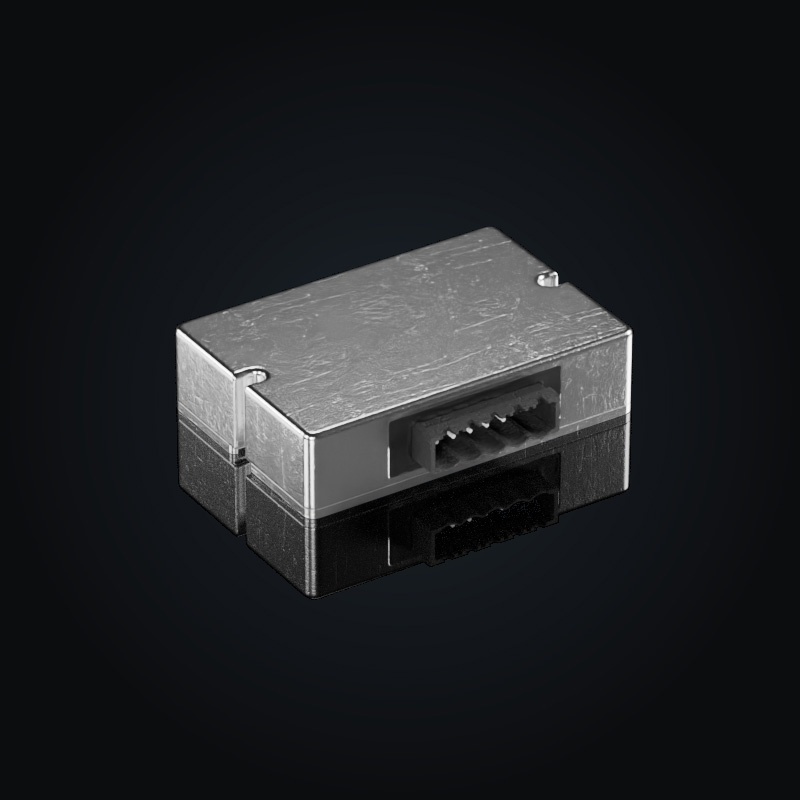
In the drive system, the 257LEX-24-SD buck-boost DC/DC converter provides a stable 24 VDC output across an operating range of 7 to 35 VDC. Since the input voltage can be either below or above the output voltage, it operates in buck-boost mode, increasing or decreasing the voltage depending on the operating conditions – keeping the 24 V supply stable even when the energy storage system is deeply discharged. The low start-up threshold allows the stored energy to be used down to a very low voltage instead of leaving remaining capacity unused.
DC/DC converters for your cableway project
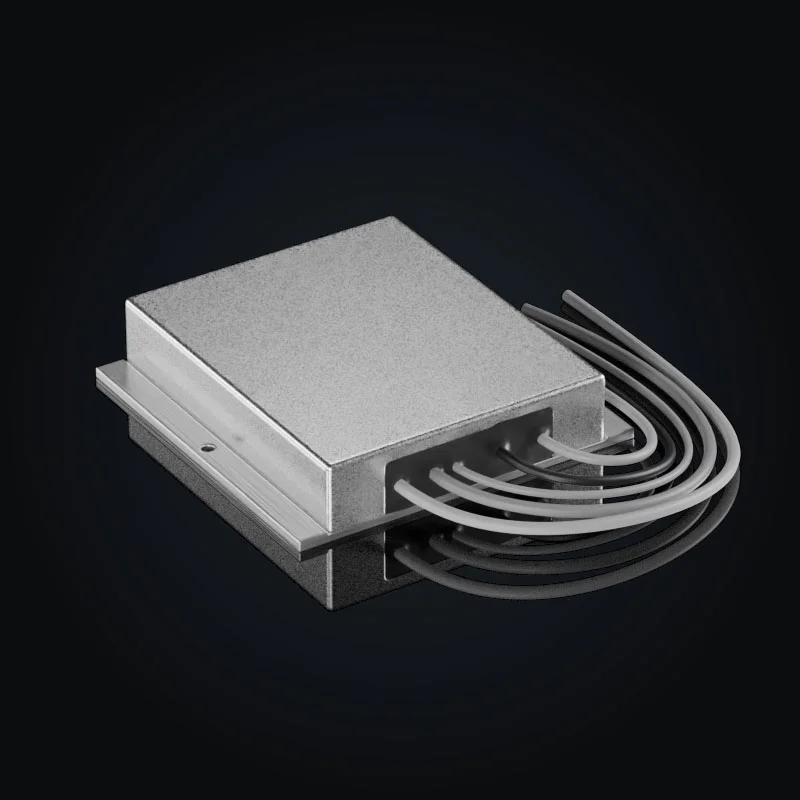
Energy storage type, voltage range, power requirements and backup requirements – send us the key specifications of your project. We will review your application and let you know whether a standard product is suitable, an existing platform can be adapted or a custom development is required.
FAQs
Have questions? We have answers!
What requirements must the power supply in aerial cableways meet?
Cableway vehicles are electrically self-sufficient and supply communication systems, emergency lighting, door controls, passenger information systems and other loads from batteries or supercapacitors. The power supply must provide a stable onboard voltage despite widely fluctuating storage voltages, while also coping with vibration, temperature changes, high altitudes and limited installation space.
Why are wide input voltage ranges important in cableway vehicles?
A wide input range refers to the ability to provide the same stable output voltage across a wide range of input voltages – without switching between ranges and without a drop in power at the range limits. It is expressed as a ratio: an input range of 20 to 100 VDC corresponds to 1:5. The higher the ratio, the more different voltage platforms can be covered by a single device.
Which loads in a cableway cabin require a reliable power supply?
Depending on the system, these include communication systems, emergency lighting, door controls and passenger information systems. Especially in the event of a fault, important functions must remain available even if the cabin’s normal power supply is limited.
Do DC/DC converters operate at altitudes above 3,000 metres and in freezing temperatures?
Yes. The 145E-13.8-SD is used in a 3S glacier cableway at an altitude of over 3,000 metres. The fully encapsulated electronics operate from −40 °C to +85 °C without power derating, fans or moving parts.
What happens to the onboard power supply if the cableway stops in the event of a fault?
The backup battery then supplies the safety-relevant functions. This requires the battery to have been reliably charged during normal operation – exactly what a converter with a defined charging profile provides.
What power supply requirements does autonomous transport place on a cableway?
In autonomous transport, control systems, communication systems and other electrical loads must be reliably supplied across all operating conditions. When cableways and autonomous passenger transport are combined, different energy and voltage levels come together. DC/DC converters provide the required stable supply voltages and electrically isolate the systems from each other.
More questions? Check our FAQ or glossary for further information, or contact us.