


DC/DC Converters for Battery and Supercapacitor Systems
DC/DC converters for battery- and supercapacitor-powered systems compensate for widely fluctuating storage voltages and provide stable supply voltages for control systems, communication systems, sensors and high-power loads. Our compact and efficient power supply solutions support battery, supercapacitor and hybrid systems in warehouse automation, mobile transport systems and portable devices.
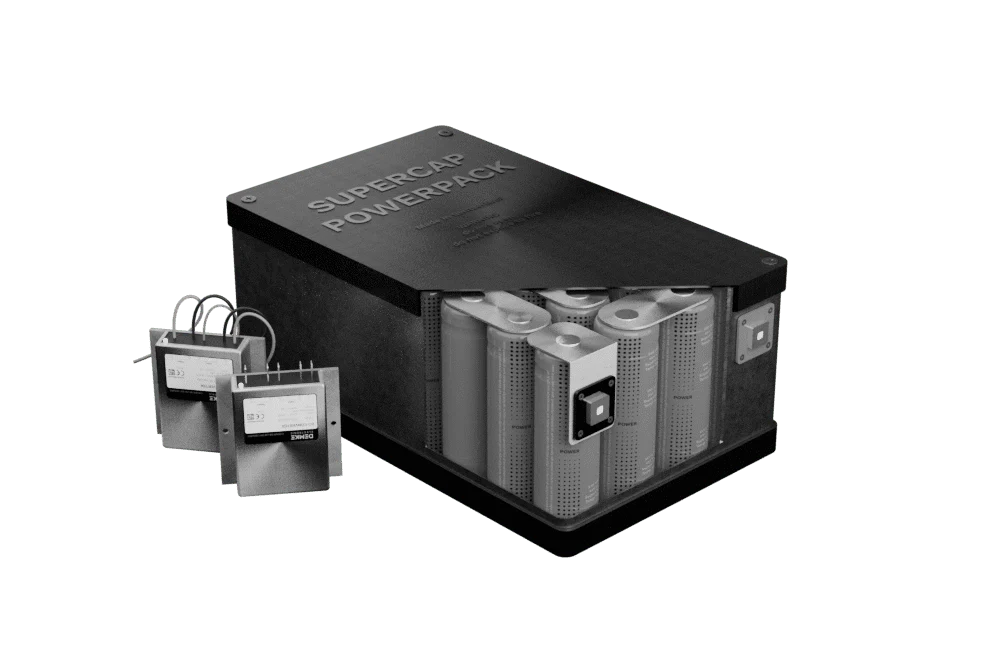
Stable power supply with fluctuating storage voltage
Batteries and supercapacitors have different electrical characteristics. Batteries store relatively large amounts of energy and are suitable for continuous power supply over longer periods. Supercapacitors, on the other hand, can be charged and discharged very quickly and provide high power for short periods.
During discharge, the voltage of both energy storage systems changes. With supercapacitors in particular, the voltage can drop over a wide range. However, connected control systems, communication systems and other loads usually require a stable supply voltage.
A suitable DC/DC converter must therefore provide a stable output even with widely fluctuating input voltages. At the same time, high efficiency, low heat generation, compact dimensions and, depending on the application, buck-boost operation, parallel operation or galvanic isolation are required.
Longer operating time for supercapacitor-powered warehouse robots
An international manufacturer of automated warehouse and transport systems uses supercapacitors as the energy source for its transport robots. The vehicles automatically store and retrieve large quantities of goods and need to remain available for as long as possible during continuous 24/7 operation.
As the available installation space inside the robots is limited, a particularly compact and lightweight DC/DC converter was required. At the same time, a stable 24 VDC supply had to be maintained even when the supercapacitors were deeply discharged.
Stable 24 VDC until the end of the discharge cycle
The voltage of a supercapacitor decreases continuously during discharge. The 257LE-24-SD continues to provide a stable 24 VDC output voltage even at an input voltage of only 9 VDC.
This allows the energy stored in the supercapacitor to be used over a larger part of the discharge range. In this specific system, the transport robots can operate for an average of up to ten minutes longer per cycle.
For automated warehouse systems with high vehicle utilisation, this means longer operating times and fewer interruptions for charging or replacement.
For this application, the 257LE-24-SD DC/DC converter is used. It achieves an efficiency of up to 98%, measures 90 × 90 × 26 mm and weighs only 355 g.

Stable 28 V power supply for transport shuttles in the aviation industry
A manufacturer of transport shuttles for the aviation industry requires a stable 28 VDC power supply for the electrical systems of its vehicles.
A nominal input voltage of 24 VDC is available. However, depending on the state of charge and operating conditions, this can vary between 20 VDC and 30 VDC. At the same time, the output voltage must not fall below 27 VDC.
In particular, during power-intensive boot-up processes, communication with the aircraft must remain reliable. A temporary voltage drop could cause control or communication systems to restart or the connection to be interrupted.
For this application, the 257E-28-SD buck-boost DC/DC converter is used. It can both increase and decrease the input voltage, providing a stable 28 VDC output voltage across the entire specified input voltage range.
More than 1 kW through parallel operation
The connected loads on the 28 V side occasionally require a total power of more than 1 kW. To provide the required output current, three DC/DC converters are connected in parallel.
The parallel connection provides a scalable power supply and distributes the required power across several compact converter modules.
Backup battery for unplanned downtime
In some versions of the system, an additional backup battery is used. It supplies power if the vehicle stops unexpectedly and the supercapacitors are already discharged or cannot be recharged immediately.
This keeps the communication and control systems online even under these operating conditions. Depending on the system design, the power supply also manages the controlled charging or integration of the backup battery.
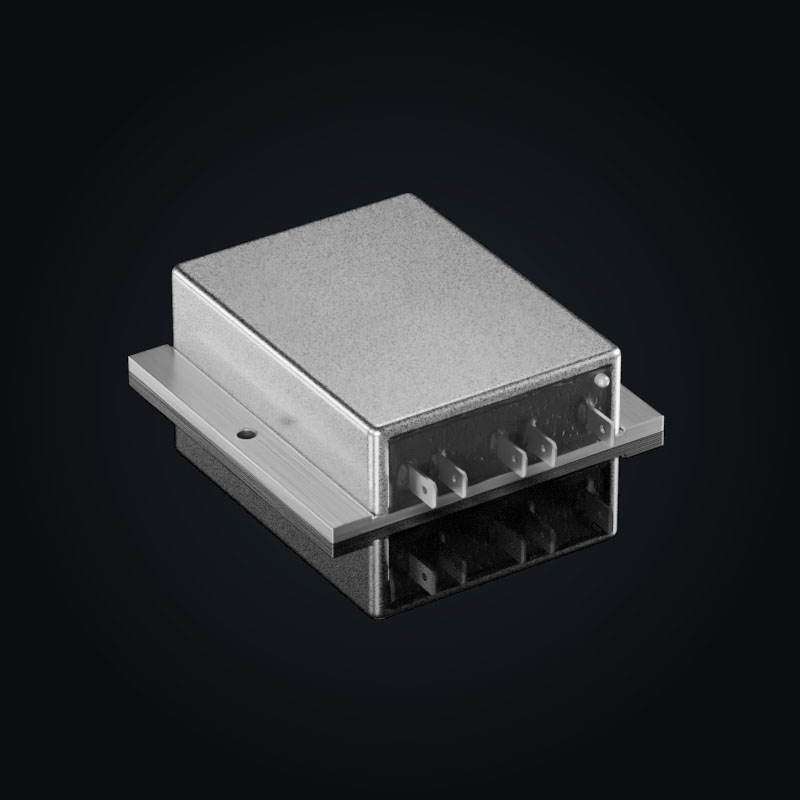
Compact DC/DC converters for portable battery-powered devices
In portable battery-powered devices, the size and weight of the power supply directly affect the mobility and ease of use of the overall system.
A customer therefore requires a powerful, galvanically isolated DC/DC converter that takes up as little installation space as possible and does not unnecessarily increase the overall weight of the portable application.
For this application, the galvanically isolated 755-24-SD DC/DC converter is used. Although it is one of the larger Demke models, it provides high power in a relatively compact and lightweight design.
Galvanic isolation electrically separates the input and output. At the same time, the robust, encapsulated design protects the electronics against mechanical and environmental stresses.
This allows a powerful and reliable 24 VDC power supply to be implemented even in a portable application, without the power supply system taking up excessive installation space or adding unnecessary weight.
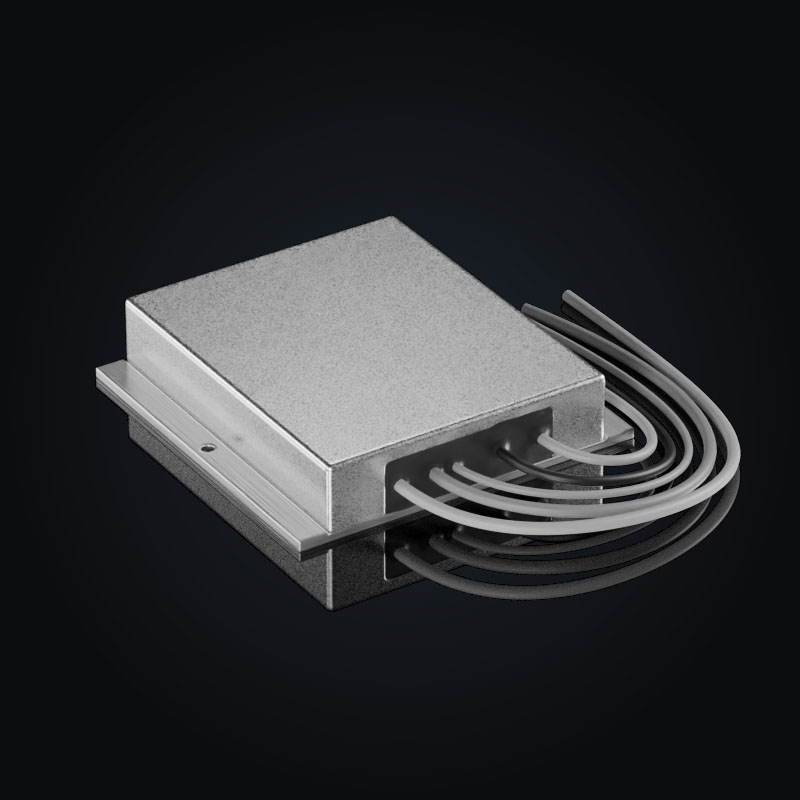
DC/DC converters for battery, supercapacitor and hybrid systems
Our DC/DC converters are suitable for a wide range of systems using batteries, supercapacitors or combined energy storage systems. These include mobile robots, transport systems, backup power supplies, charging systems, portable devices and industrial energy storage systems.
Depending on the application, the input voltage range, output voltage, power, buck-boost function, galvanic isolation, CC/CV control and parallel operation can be adapted.
DC/DC converters for your energy storage system
Battery and supercapacitor systems differ in voltage behaviour, power peaks, state of charge, output voltage, available space and thermal requirements. We check your application and discuss whether an existing DC/DC converter is suitable or if a customized solution is needed.
FAQs
Have questions? We have answers!
Why are buck-boost converters particularly suitable for battery and supercapacitor systems?
The voltage of batteries and especially supercapacitors changes during charging and discharging. Buck-boost converters can both increase and decrease the input voltage, providing a stable output voltage even when the storage voltage is above or below the required supply voltage.
Why can a DC/DC converter extend the operating time of a supercapacitor system?
A DC/DC converter with a wide input voltage range can make the energy stored in the supercapacitor usable over a larger part of the discharge range. In our warehouse robot project, this provides an average of up to ten additional minutes of operating time per cycle.
What is the difference between a battery and a supercapacitor in a power supply system?
Batteries store relatively large amounts of energy and are suitable for continuous power supply over longer periods. Supercapacitors, on the other hand, can be charged and discharged very quickly and provide high power for short periods. Both energy storage technologies have different requirements for the downstream power supply.
How can a stable output voltage be maintained when the storage voltage decreases?
A DC/DC converter regulates the fluctuating storage voltage to the required output voltage. If the input voltage drops below the required output voltage during discharge, a suitable buck-boost converter can increase the voltage and continue to provide a stable power supply.
Can DC/DC converters be connected in parallel for power levels above 1 kW?
Yes. With DC/DC converters designed for parallel operation, the output power can be increased by connecting several units in parallel. In our transport shuttle project, three converters operate in parallel and provide more than 1 kW of output power together.
Can a DC/DC converter also integrate or charge a backup battery?
Yes, depending on the design of the power supply. DC/DC converters with suitable control can integrate a backup battery into the power supply system and, depending on the application, also provide a controlled charging function. During normal operation, the battery can be charged and, if the main power supply fails, it can supply power to critical systems.
What role do efficiency, weight and installation space play in mobile energy storage systems?
High efficiency reduces energy losses and heat generation, while compact dimensions and low weight make integration into mobile systems easier. This is particularly important for robots, transport shuttles and portable devices, where battery capacity, installation space and overall weight are limited.
More questions? Check our FAQ or glossary for further information, or contact us.