

DC/DC converters for material handling vehicles and electric forklifts
DC/DC converters for material handling vehicles and electric forklifts reliably supply control units, sensors, displays, cameras and other onboard loads with stable voltage – regardless of whether the vehicle operates with a 24 V, 48 V, 80 V or other battery system. Demke develops compact and efficient power supply solutions for intralogistics, designed to withstand vibration, shocks, changing temperatures and continuous vehicle operation.
Stable Power Supply in Intralogistics
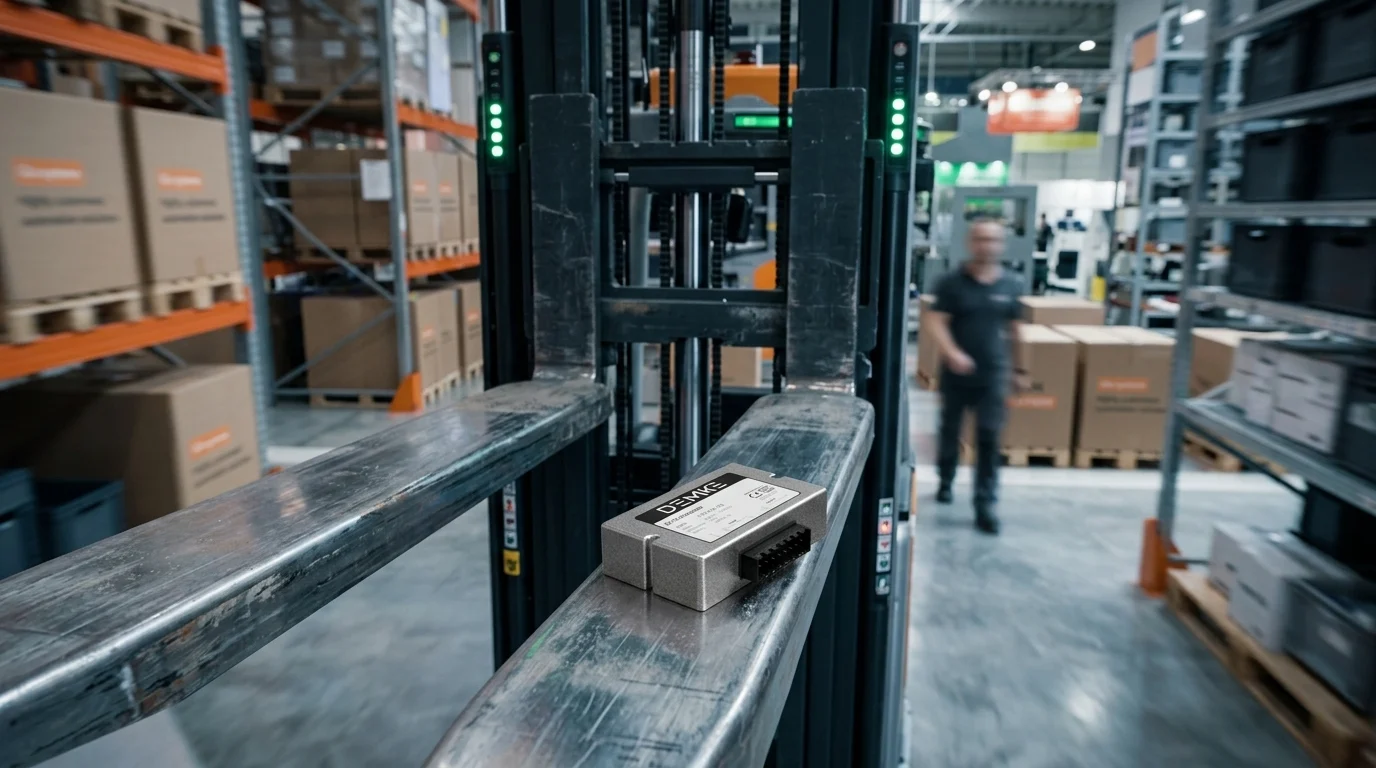
Forklifts,
The onboard electronics, on the other hand, typically require fixed supply voltages such as 12 VDC or 24 VDC. The right DC/DC converter must therefore reliably handle voltage fluctuations, minimize energy losses and withstand the mechanical and thermal stresses of vehicle operation.
One DC/DC converter for multiple vehicle platforms
Manufacturers and operators of material handling vehicles use different battery systems depending on the vehicle type and power requirements. If separate converter variants are required for 24 V, 48 V and 80 V vehicles, this increases the effort involved in development, procurement, inventory management and spare parts management.
Wide-input DC/DC converters can cover multiple battery systems with a single device variant. They handle a wide input voltage range while providing a fixed output voltage for the onboard electronics.
For example, the 154DH-12-ON provides a stable 12 VDC output voltage, while the 154DH-24-ON supplies the connected loads with 24 VDC. This allows different vehicle platforms to use a common converter solution.
Standardizing the power supply reduces the number of variants required. This simplifies spare parts management, maintenance and technical approvals. At the same time, a standardized converter solution can be used across multiple vehicle classes or battery systems.

Efficient power supply for onboard electronics
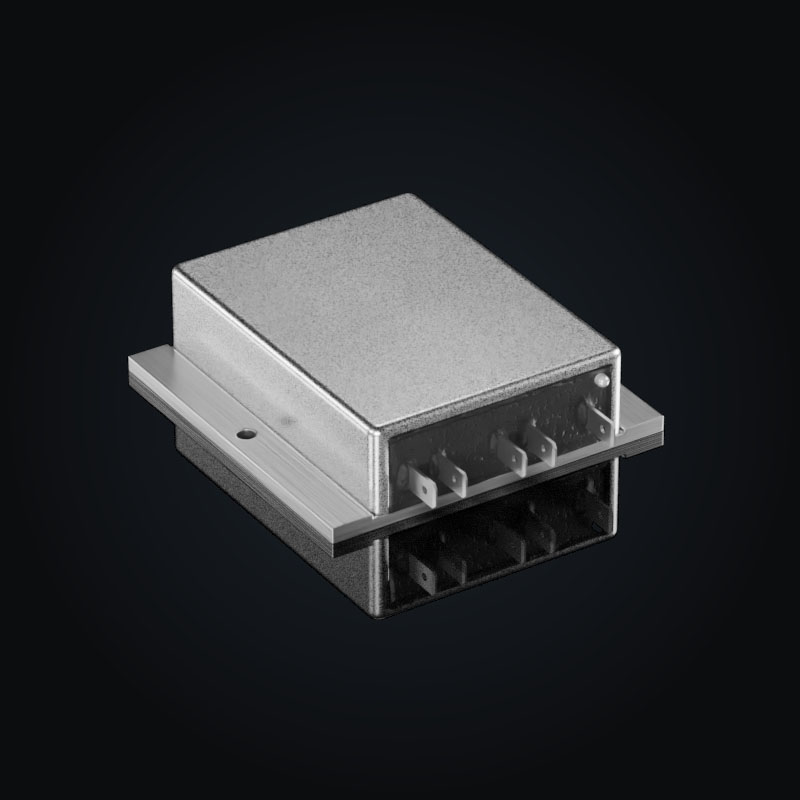
Voltage conversion in battery-electric vehicles results in power losses. High efficiency reduces these losses and helps to make more efficient use of the available battery capacity.
Depending on the model, our DC/DC converters achieve efficiencies of up to 99%. The low power loss also reduces heat generation and facilitates integration into compact vehicle spaces.
This is particularly relevant for material handling vehicles that are used for many hours in warehouses, production facilities or automated material flow processes.

Robust power supply under vibration and shock
Material handling vehicles travel over ramps, thresholds, transitions between halls and, in some cases, uneven surfaces. In addition, picking up and setting down loads creates mechanical stresses that continuously affect the vehicle electronics.
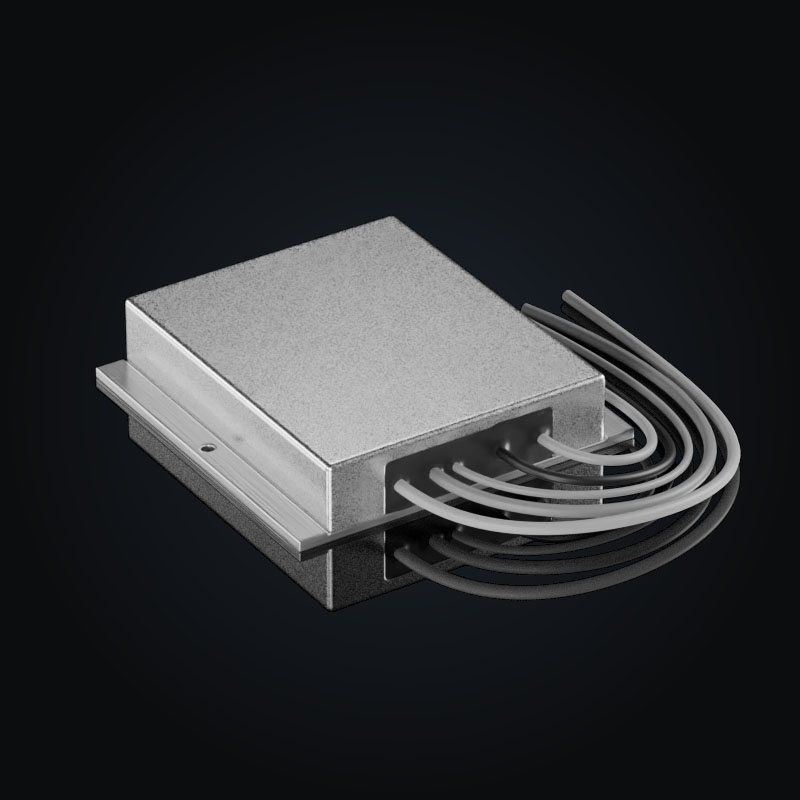
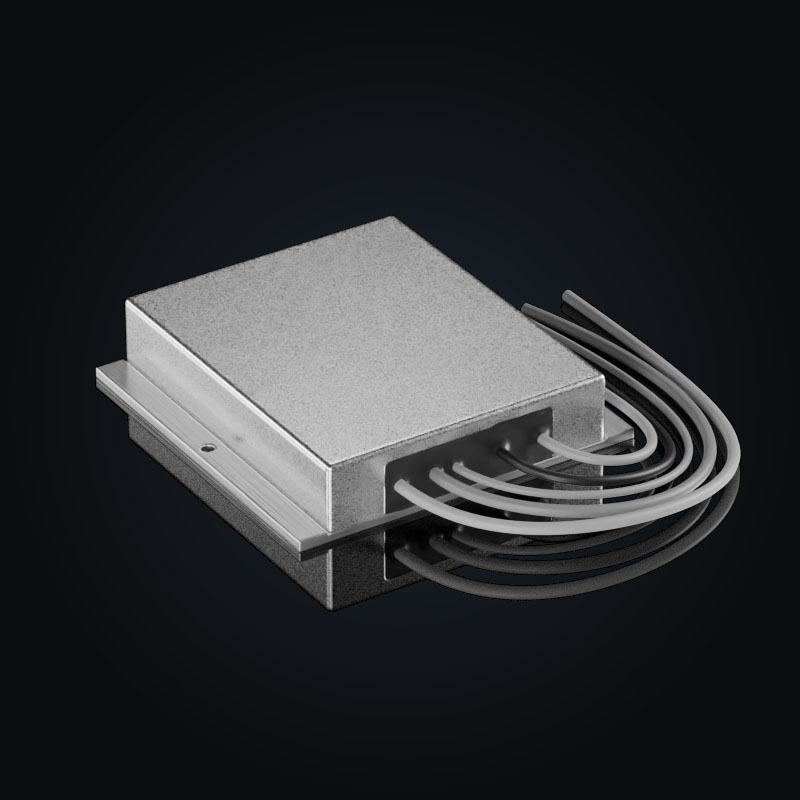
Our DC/DC converters are therefore designed for demanding operating conditions. The polyurethane potting stabilizes and protects the electronic components against vibration, shock and other environmental influences.
The compact design enables integration even where installation space is limited. Depending on the application, the housing, connections, output voltage and electrical characteristics can be adapted to the vehicle concept.
Galvanically isolated 24 V power supply in an electric forklift
A powerful, galvanically isolated power supply was required for an electric forklift. The DC/DC converter had to support different battery systems while providing a stable 24 VDC supply for the connected loads.
The 755-24-SD DC/DC converter is used as the solution. Its input voltage range from 18 VDC to 110 VDC allows it to be used in vehicles with 24 V, 48 V and 80 V battery systems.
Galvanic isolation electrically decouples the input and output from each other. The robust design, EMC-compliant engineering and polyurethane potting support reliable operation under the mechanical and environmental conditions of a material handling vehicle.
The converter features constant current and constant voltage control. Depending on the configuration, it can therefore be used not only to supply onboard loads, but also as a DC/DC charging converter for batteries.
The wide input voltage range allows the same power supply solution to be used in different vehicle variants. The compact design, low weight and high efficiency facilitate integration into the electric forklift.
Depending on the product version and installation conditions, our DC/DC converters are designed for an extended temperature range of up to −40 °C to +85 °C. This makes them suitable for material handling vehicles used in unheated halls, refrigerated areas, outdoor environments or under significant temperature fluctuations.
DC/DC converter tailored to your material handling vehicle
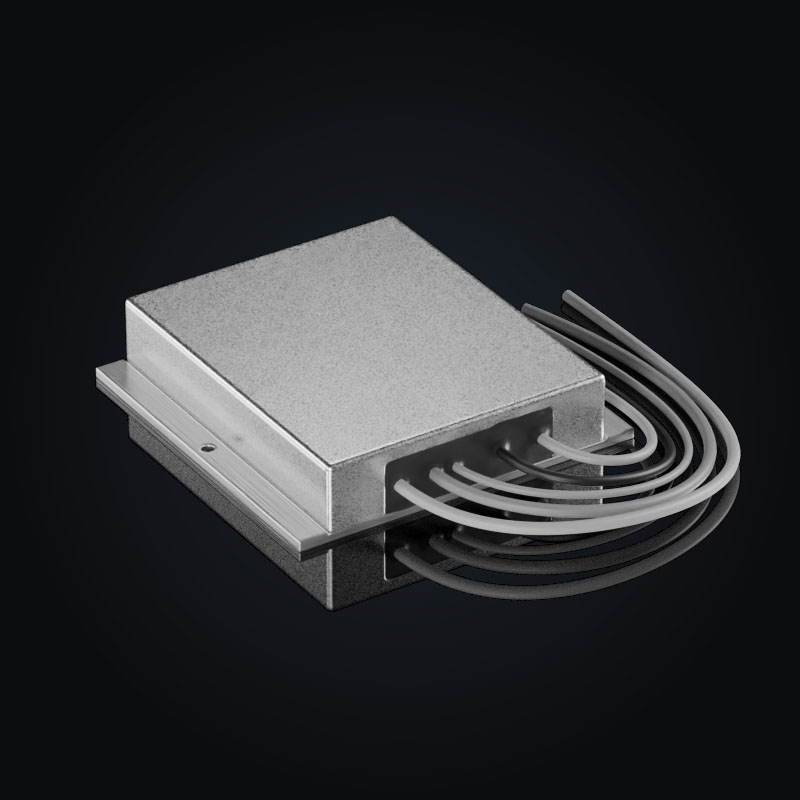
Power supply requirements vary depending on the battery system, load power, installation space, environment and required galvanic isolation. In addition to existing standard products, Demke also develops customized DC/DC converters for specific vehicle platforms and electrical requirements.
FAQs
Have questions? We have answers!
What battery voltages are used in material handling vehicles and electric forklifts?
Depending on the vehicle type and power class, different battery voltages are used in material handling vehicles, such as 24 V, 48 V or 80 V. DC/DC converters with a wide input voltage range can cover several of these battery systems and generate the required stable supply voltage for the onboard electronics.
Can a DC/DC converter support multiple vehicle platforms?
Yes. DC/DC converters with a wide input voltage range can be used for different battery systems and vehicle platforms. This reduces the number of converter variants required, simplifying development, procurement, inventory management, maintenance and spare parts management.
Why is galvanic isolation useful in electric forklifts?
Galvanic isolation electrically decouples the input and output of the DC/DC converter. This allows different circuits within the vehicle to be electrically isolated from each other and the connected onboard electronics to be supplied according to the requirements of the application. Whether galvanic isolation is required depends on the vehicle’s electrical architecture and safety requirements.
How are control systems, displays, cameras and sensors in electric forklifts supplied with 12 V or 24 V?
The onboard electronics often require a stable 12 VDC or 24 VDC supply, while the vehicle’s battery voltage may be significantly higher and can fluctuate during operation. A DC/DC converter converts the available battery voltage into the required stable supply voltage for control systems, displays, cameras, sensors and other loads.
Why is high efficiency important in battery-electric material handling vehicles?
High efficiency reduces power losses during voltage conversion and therefore also reduces the resulting waste heat. This allows the available battery capacity to be used more efficiently. At the same time, lower heat generation facilitates the integration of the DC/DC converter where installation space is limited.
How are DC/DC converters protected against vibration, shock and temperature fluctuations?
A robust mechanical design and full polyurethane potting of the electronics protect the components against vibration, shock and other environmental influences. Depending on the model, our DC/DC converters are also designed for wide temperature ranges, making them suitable for demanding operating conditions in material handling vehicles.
Can a DC/DC converter also be used to charge a battery?
Yes. DC/DC converters with constant current and constant voltage control (CC/CV) can, depending on their configuration, also be used as DC/DC charging converters for battery systems. The charging current and voltage are regulated according to the requirements of the respective battery.
More questions? Check our FAQ or glossary for further information, or contact us.